ServicesWhole-house carbon filtration
Carbon Filtration for the Whole House in Carrollton
When your tap water smells like a pool or a shower leaves a chemical odor behind, one carbon system on the main line handles every faucet together. We test first, size the media for your flow and leave a tidy, labeled installation.
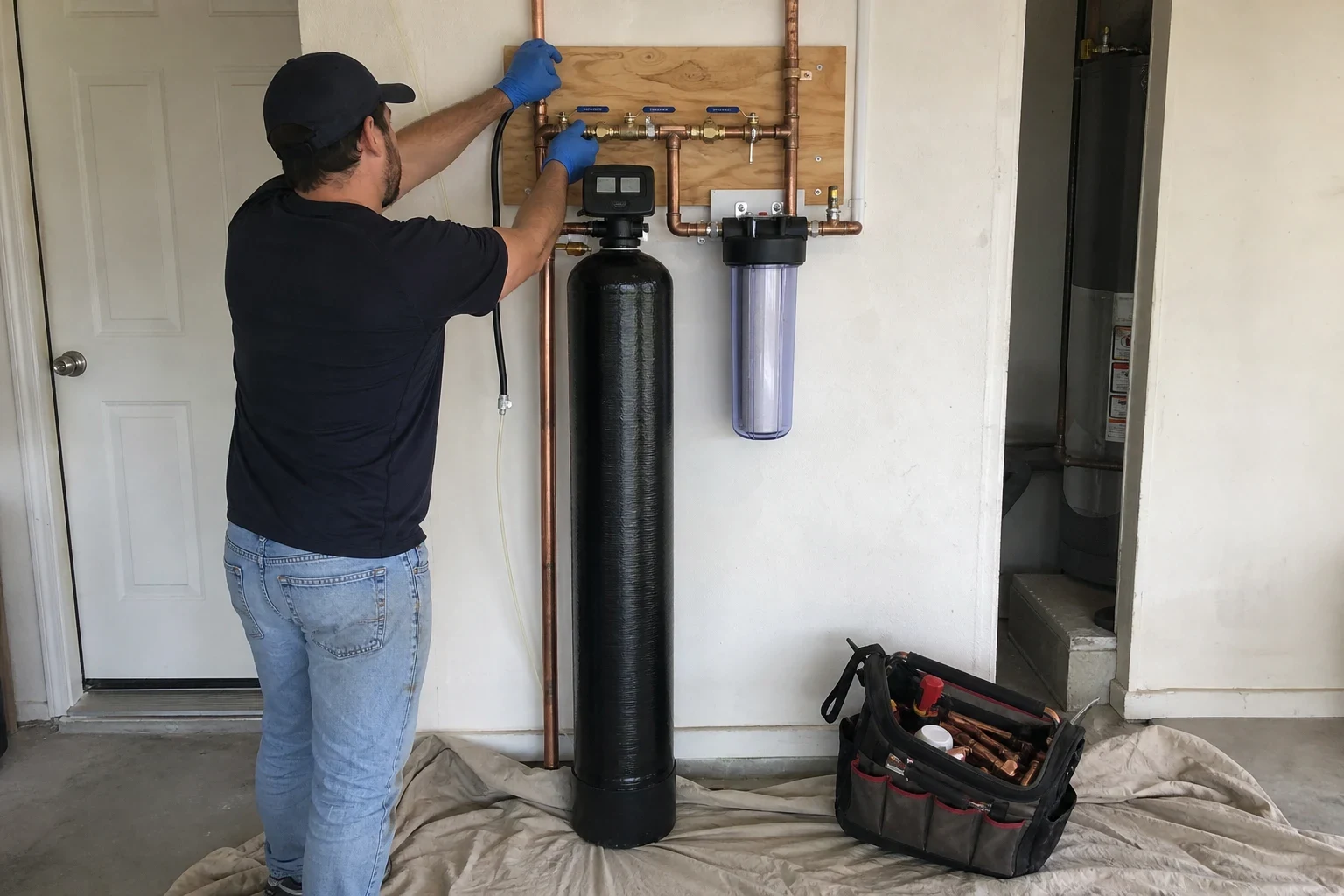
How whole-house carbon filtration works
Utilities add disinfectant to keep water clean through the long run of pipe between the plant and your street. When it reaches your taps, the leftover disinfectant often comes through as a sharp taste and a pool smell. Activated carbon removes it by adsorption: as water flows through the bed, the disinfectant and many organic compounds stick to the huge internal surface of each granule.
North Texas utilities may disinfect with chlorine or with chloramine, and that matters. Ordinary granular activated carbon removes chlorine well but chloramine only slowly. Catalytic carbon, with its modified surface, breaks down chloramine much more effectively. We check which one is in your water before choosing media, so you do not pay for a tank that solves only half the problem.
Carbon does not soften water or remove dissolved minerals. When drinking water needs stricter treatment, under-sink reverse osmosis at the kitchen does that job better, and plenty of homes use both.
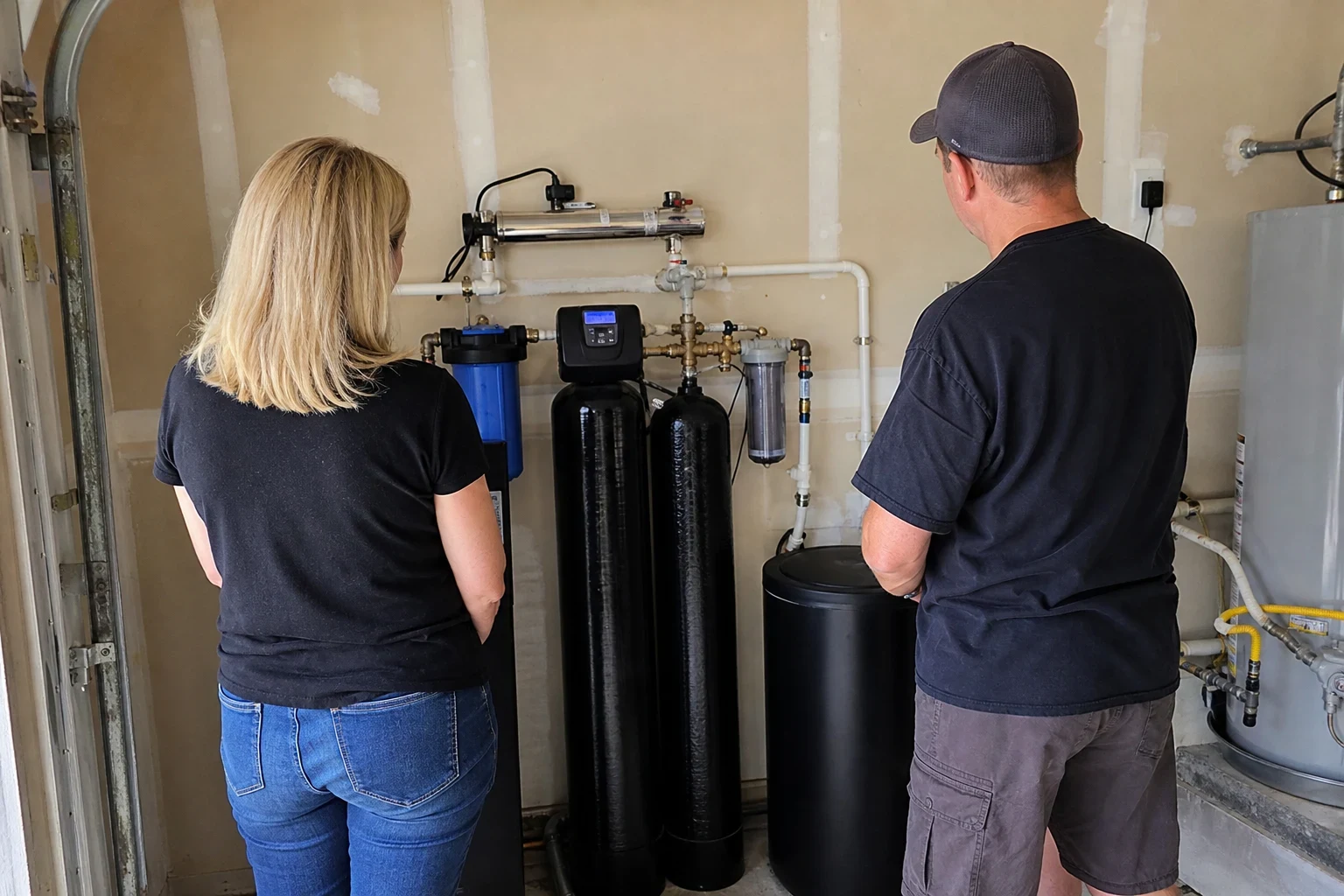
What the installation includes
- 01
A disinfectant test before anything else
We measure free and total chlorine at a tap so we know whether you have chlorine or chloramine. That result decides between standard and catalytic carbon.
- 02
Media sized to your flow rate
We count bathrooms and fixtures and estimate peak demand in gallons per minute. Too little carbon means water rushes past without enough contact time, and the taste comes back early. An undersized cartridge housing can also cause a noticeable pressure drop when two showers run.
- 03
A particle stage upstream of the carbon
Grit and flakes of pipe scale get trapped in a sediment cartridge before water reaches the carbon, so the bed stays open and keeps working. If you already see particles or rust-colored staining, iron and sediment filtration may be the right first step.
- 04
Bypass valve and shutoffs
Every system gets a three-valve or built-in bypass so you keep running water during service or if anything ever needs attention.
- 05
Ground bonding jumper
Where your plumbing is metal and part of the electrical ground path, cutting in a filter can break that path. We install a bonding jumper across the system to keep the ground continuous.
- 06
Before-and-after records
We photograph the main line, valves and fittings before we cut in and again when we finish. You get those photos with your paperwork.
Questions about Whole-house carbon filtration?
Call(972) 430-6272Signs a whole-house carbon filter fits your home
Bleach smell in the shower
Hot water releases disinfectant into the air. If the bathroom smells like a pool after a shower, an under-sink filter will not help because the shower is not on that line.
Coffee, tea and ice taste off
Chlorine and chloramine flatten the taste of anything made with tap water. Refrigerator filters are small and often go weeks past their rated life.
Dry skin or irritated eyes after bathing
Some people notice this with disinfected water. Carbon removes the disinfectant at the shower head as well as the sink.
You are filtering one faucet and want the rest
If a pitcher or faucet filter already made a difference in taste, a whole-house system extends that to every tap, the laundry and outdoor faucets you choose to include.
An old housing near the main is weeping
Cracked or sun-damaged filter housings and worn O-rings drip slowly, often in a garage where nobody looks. Replacing an aging system before it fails is cheaper than drying out drywall.
How install day runs
- 1
Test and plan the location
We confirm the disinfectant type, check incoming pressure and find where the main enters your home. Most systems go in the garage or a utility area right after the main shutoff and ahead of the water heater.
- 2
Protect the space and shut off the water
We lay down drop cloths, photograph the existing pipe and valves, then close the main. We note anything we see that is already damaged, like corrosion or a leaking valve, and show it to you before we start.
- 3
Cut in, bond and connect
We install the bypass, sediment stage and carbon tank or housings, add the bonding jumper on metal pipe and secure everything so the weight is not hanging on the line. Where a tank needs a drain for backwashing, we route it to an approved drain point.
- 4
Flush, check and walk through
New carbon releases fine dust, so we flush until water runs clear and recheck the fittings under pressure. Then we show you the bypass, explain the change schedule and leave the area clean.
What affects the cost of a carbon system
Once we see your plumbing, you get an itemized written quote. The main variables are how much carbon your house calls for and how hard the main line is to reach. These are the things that move the price.
- Standard or catalytic carbon
- Catalytic carbon is pricier than standard granular carbon, but when your water has chloramine it is the media that does the job.
- Cartridges or a media tank
- Big cartridge housings cost less at the start but need changing more often. A loose-media tank goes longer between replacements and keeps flow steadier in bigger homes.
- Reaching the main line
- A main coming through an open garage wall is simple. One behind finished drywall, in a cramped closet or outside the slab takes more labor and at times more fittings.
- Type and condition of pipe
- Copper, PEX and older galvanized pipe each call for their own connections. Corroded valves where we tie in may need replacing so the new system is not connected to a weak point.
- Permit and drain line
- When the city requires a permit for the tie-in, we pull it and list it separately. Backwashing tanks need a drain too, and how far away it is affects the price.
Whole-house carbon filtration questions
Will I notice lower pressure after the system goes in?
You should not, if the system is sized right. Pressure loss usually traces back to cartridges too small for the household's demand or a carbon bed packed with debris. We match the valve ports and media volume to your peak flow, and the sediment stage keeps the carbon from clogging.
How often does the carbon need replacing?
It depends on the system type, the amount of carbon and how much water your home uses. Cartridge systems need changes far more often than large tanks. Our filter replacement and maintenance service keeps track of the schedule so the carbon does not quietly run out.
Does carbon remove lead or hardness?
Carbon is chosen here for disinfectant taste and odor, not hardness, and it does not soften water. For lead from older plumbing near the tap, under-sink reverse osmosis at the kitchen is the more reliable step. If scale is a concern, we test hardness before recommending a softener.
An old filter leaked and damaged my floor. Can you help with the insurance claim?
We can document what we find: photos of the failed housing, the cracked part itself and a written note of what caused the leak. That gives your adjuster a clear record. We do not decide coverage or speak for your insurer, and we will not tell you a claim will be paid.
Should I test my water before buying a carbon system?
Yes. Knowing whether you have chlorine or chloramine decides which carbon will work, and a broader water testing visit can catch iron or sediment that would foul the carbon early.
Get rid of the chemical taste at every tap
Tell us how your water tastes and where your main line enters your home. We will explain which carbon fits and what the install involves.