ServicesIron and sediment filtration
Iron and Sediment Filtration in Carrollton
Orange rings in the toilet, grit in the ice maker, a faucet aerator that keeps clogging. We test your water to find out whether the cause is loose sediment or dissolved iron, then install the filter that actually stops it at the main line.
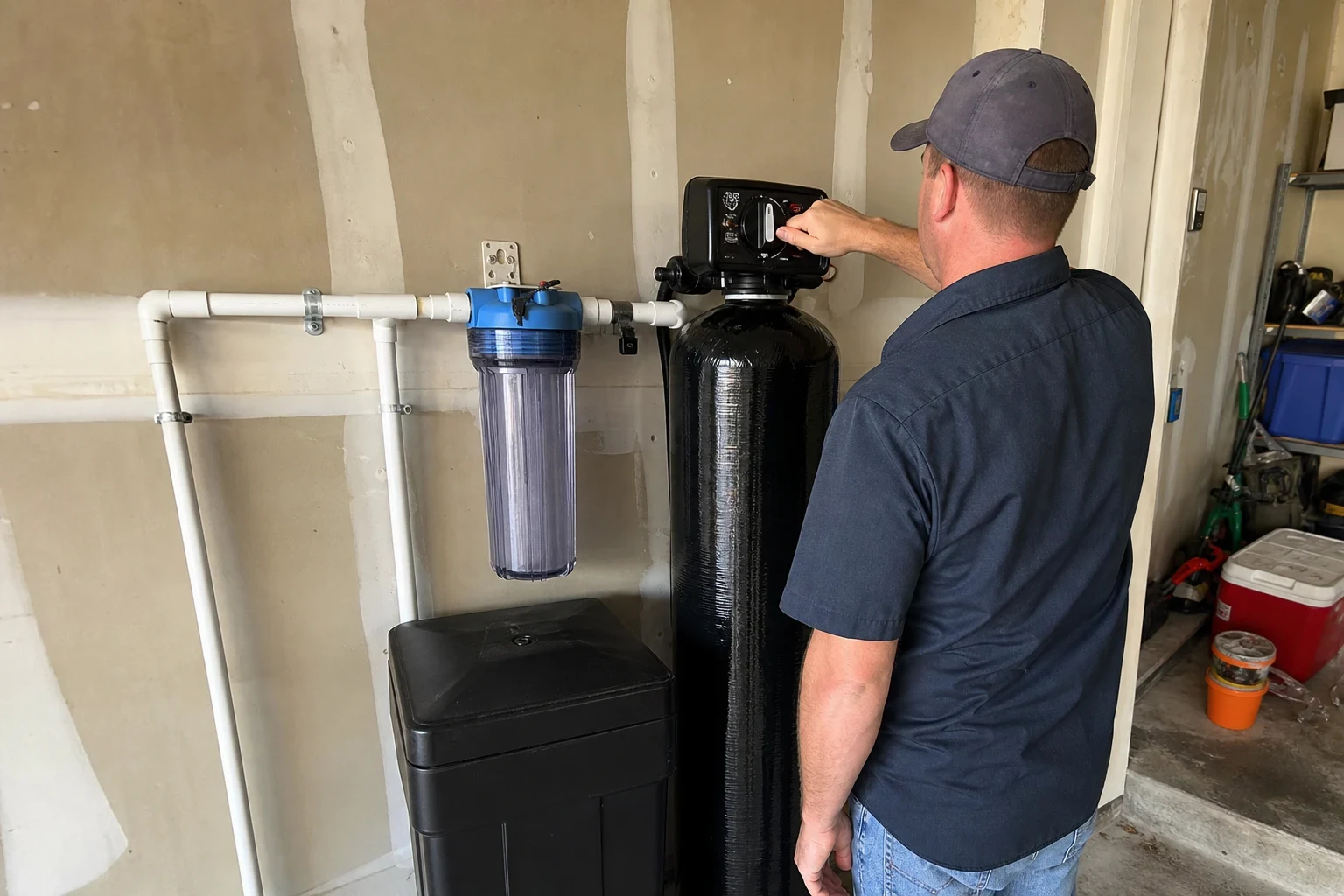
Two different problems, two different filters
Sediment is solid material you can catch: sand, pipe scale, rust flakes, bits of debris stirred up after water main work. A mechanical filter traps it on a screen or cartridge rated in microns. Dissolved iron is different. Ferrous iron is invisible coming out of the tap and only turns into orange-brown particles after it meets air, which is why a glass of clear water can stain a sink overnight.
A plain sediment cartridge will not remove dissolved iron, and an iron filter is a poor tool for heavy grit. That is why we test before recommending anything. Most homes on treated city water around Carrollton need sediment control far more often than iron removal, and we will tell you that if it is true for your home.
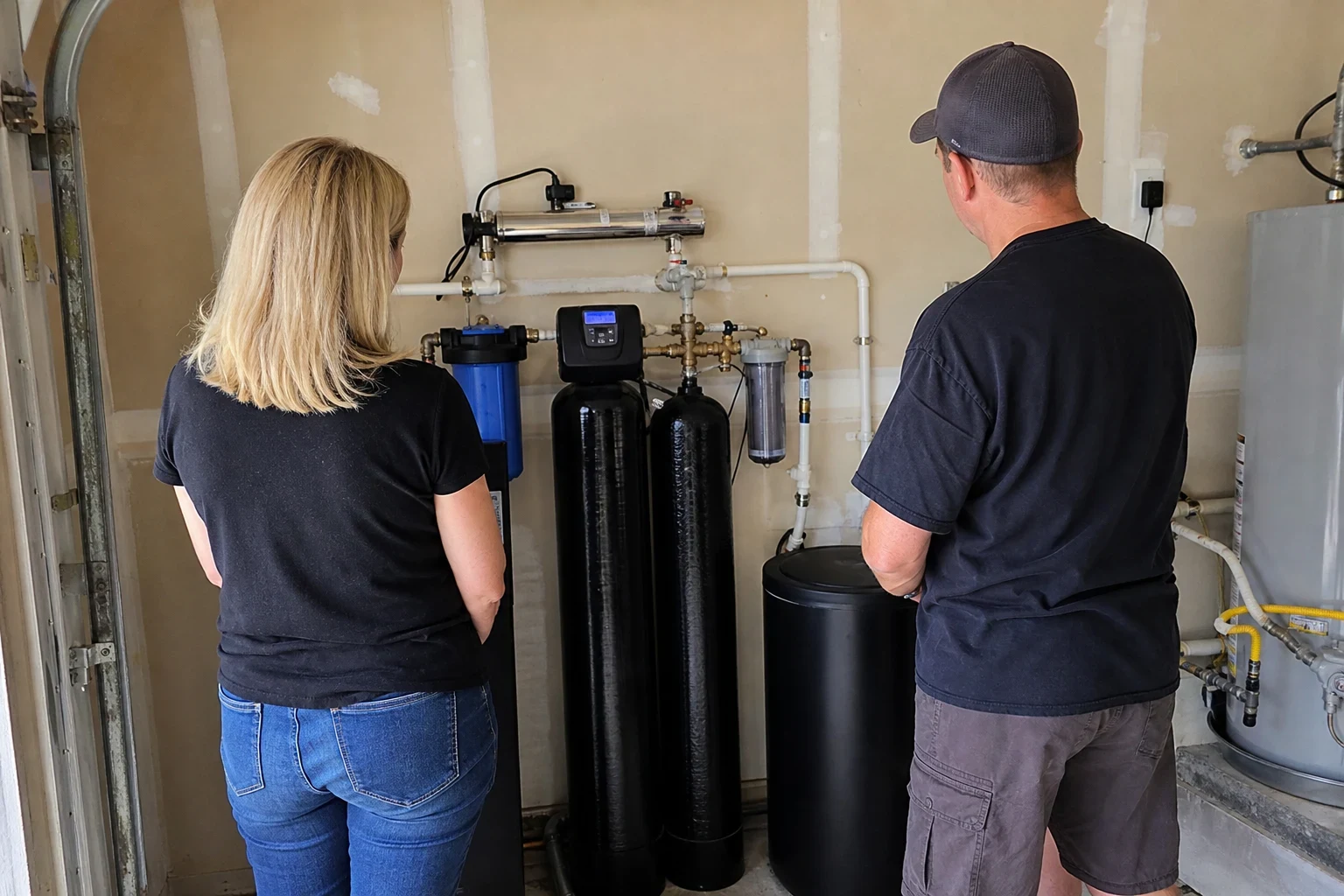
What is part of the job
- 01
Test results before sizing
We read iron, manganese, pH and turbidity, and inspect the debris in your aerators and from the water heater drain. Those results decide whether you need a cartridge, a spin-down screen or an oxidizing iron filter.
- 02
Sediment prefilter
For grit and scale we install a hand-flushable spin-down screen, a pleated or spun polypropylene cartridge, or the two together. Stepping from coarse to fine, for example 50 micron and then 5 micron, keeps the finer stage from clogging within weeks.
- 03
Oxidizing iron filter
Once dissolved iron is confirmed, we put in a backwashing tank filled with catalytic media that turns ferrous iron into particles and traps them until the next backwash. It requires a drain and an outlet, which we plan from the start.
- 04
Bypass valves and pressure gauges
Each system includes a bypass so you have water during service. Gauges on both sides of the housing show the pressure drop, so you know a cartridge is loaded rather than guessing from the calendar.
- 05
Photos and written notes
Before starting, we photograph stained fixtures, clogged aerators and old cartridges, and write down the test results. If staining or a leak ever comes up with your insurer, you have dated records.
Questions about Iron and sediment filtration?
Call(972) 430-6272When rust or grit is turning up in your home
Rust rings and yellowed whites
Iron tends to announce itself as reddish rings at the toilet waterline, streaks below the faucet spout and white towels that come out of the wash looking dingy. Chlorine bleach sets iron stains deeper, so the answer is treating the water itself rather than switching detergents.
Grit in aerators and ice makers
Sand-like particles or black flecks in faucet screens, the refrigerator filter or a dishwasher inlet mean solids are moving through your lines.
Cloudy water after main work
Brown or cloudy water after the city flushes hydrants or repairs a main is stirred-up sediment. If it happens often, a prefilter protects valves and appliances each time.
Popping water heater
Rumbling or popping as the burner runs usually means sediment has settled in the tank bottom. Filtering upstream slows that buildup.
Metallic taste
A tinny or metallic taste, especially first thing in the morning, can come from iron picked up in older pipes.
How the job runs
- 1
Test and look
We sample at the tap and, when possible, at the hose bib nearest the main. We also open aerators and check what the water heater drain releases.
- 2
Explain the options
You get a written line-item estimate showing which filter fits your results and why, plus what ongoing cartridges or media will involve. If testing shows another issue like chlorine taste, we will say so and point you to whole-house carbon filtration rather than stretch this system.
- 3
Install at the main line
We shut off the main, cut the filter in with bypass valves and gauges, and run a drain line if the system backwashes. We pull a plumbing permit where the city requires one and protect floors in the garage or utility area.
- 4
Flush, check and hand off
We flush the lines, check every joint under pressure and clean the aerators we opened. Before we leave, we show you how to read the gauges and change or flush the filter.
What moves the price
An iron and sediment system can be a single cartridge housing or a backwashing tank with its own drain and power. Your test results and your plumbing decide which one, so we quote after looking, not before. The estimate lists each part and labor item separately.
- Iron level and type
- Sediment alone needs mechanical filtration. Confirmed dissolved iron or manganese calls for oxidizing media and a larger tank, which costs more to buy and install.
- Flow rate
- A home with several bathrooms needs larger housings or a bigger tank to avoid a pressure drop when two showers and the washer run at once.
- Where the main line enters
- An accessible main in the garage is quicker to cut into than one behind finished walls or near a slab penetration that needs rerouting.
- Drain, power and permit
- Backwashing filters need a drain and an outlet nearby. Adding either, or a required permit and inspection, shows up as its own line.
Questions about iron and sediment filters
Can a sediment filter stop the iron stains on my fixtures?
Only when the iron is already in particles. Dissolved ferrous iron slips through a sediment cartridge and oxidizes later in your sink or toilet. Testing shows which form you have before you pay for the wrong filter.
Is there really iron in city water?
Treated city water generally leaves the plant with little iron. In many houses, the iron and rust flakes come from aging pipes, a corroding water heater or disturbances in the street main. So we check your plumbing along with the water.
Will a filter on the main line weaken my shower?
A housing sized for your home's peak flow costs only a few psi, which most people never notice. A noticeable drop comes from a cartridge clogged with debris. Our two gauges show that, so you change the cartridge when the needles separate rather than waiting for a weak shower.
How often should cartridges be changed?
That depends on how much sediment is in your water, so no fixed schedule would be honest. Some homes last months; others need changes more often after main work. Our filter replacement and maintenance service can take it on if you prefer.
Does homeowners insurance cover damage from iron staining?
Slow staining is generally considered wear, and most policies exclude it. A sudden leak, such as a cracked housing flooding a closet, may be treated another way. We photograph what we find and explain how claims usually go, but coverage is your adjuster's decision.
Find out what is staining your fixtures
Tell us what you are seeing and we will set up a test at your home in Carrollton or a nearby town like Coppell or Farmers Branch. You will know whether you need a sediment filter, an iron filter or neither.