ServicesUnder-sink reverse osmosis
Reverse Osmosis Under the Kitchen Sink in Carrollton
We fit reverse osmosis units beneath the sink that supply their own faucet for drinking water, coffee and cooking. Before anything goes in, we test your water and read your line pressure, then walk you through each stage so you know what gets removed and what upkeep will cost.
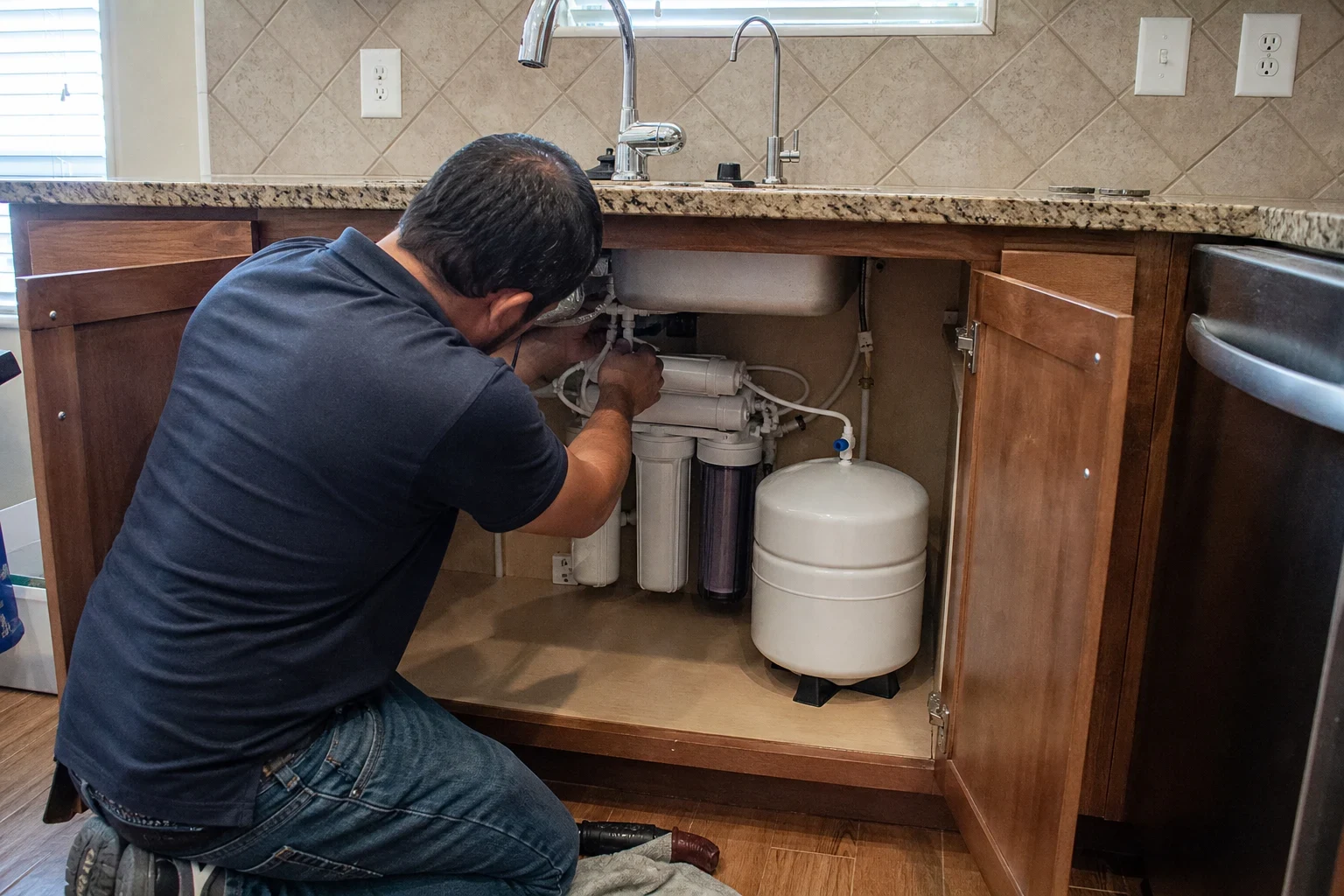
How an RO system works under your sink
An RO unit forces water across a thin-film composite membrane whose openings are fine enough to hold back dissolved solids, lead, many salts and a long list of trace contaminants. Ahead of the membrane, a sediment prefilter stops grit and a carbon block takes out chlorine, which would otherwise damage the membrane. Behind it, a carbon polishing filter removes any taste the water picks up while sitting in the storage tank.
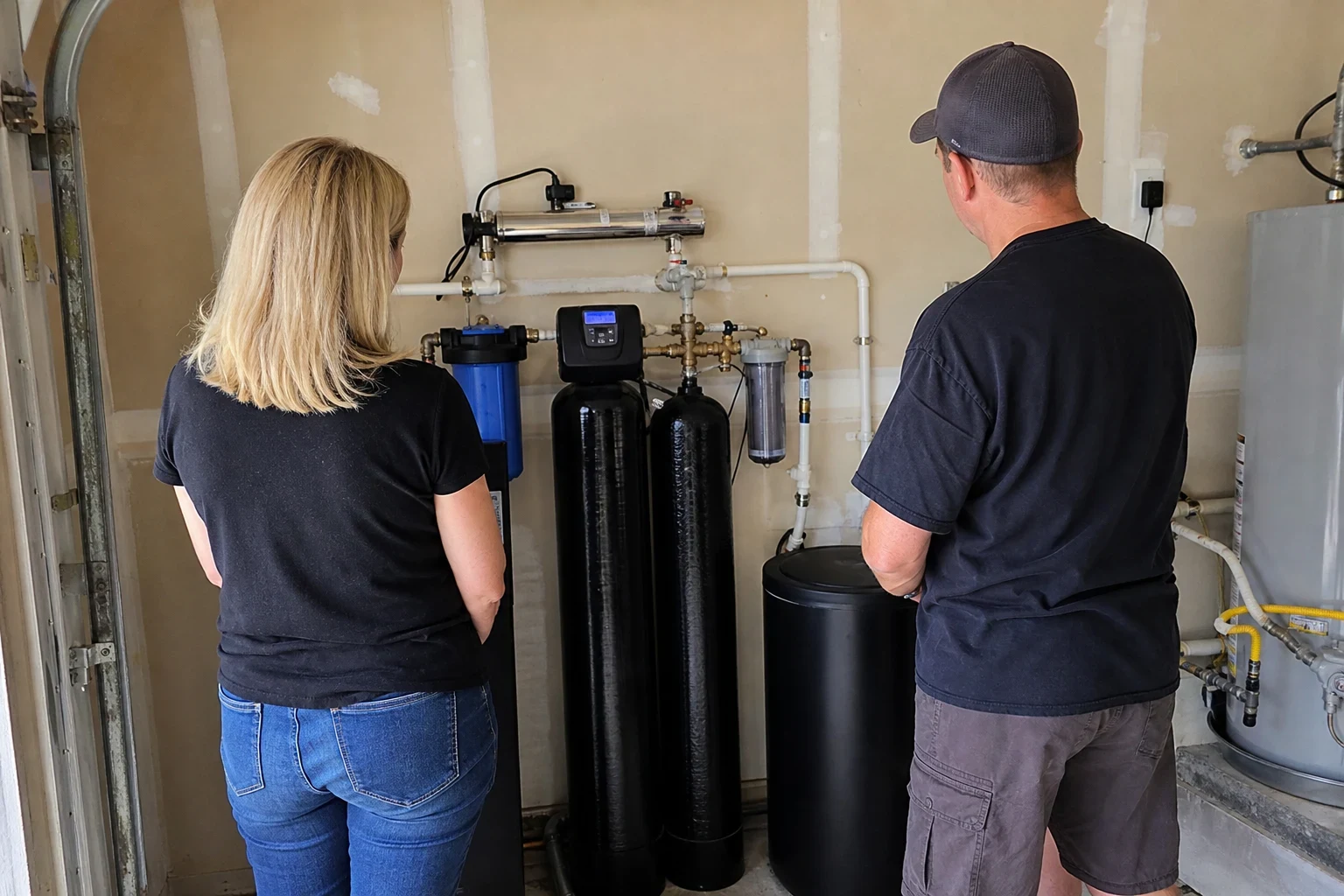
This is point-of-use treatment: one faucet, not the whole house. That is why it works well alongside whole-house carbon filtration when you also want better water at the showers and other taps. For lead from older plumbing or added confidence in drinking water, RO is usually the right choice. For a chlorine smell throughout the house, it is not.
We also take on the messier part of under-sink work. When an older unit has leaked into the cabinet, we photograph the damage and the part that failed before removing anything, so you have a clear record if you choose to call your insurer. We tell you what we found; coverage is your adjuster's call.
What the installation includes
Pressure and drain check
We measure your incoming water pressure with a gauge. Most membranes need roughly 40 psi or more to work efficiently; below that, production drops and more water goes to drain, so we will tell you if a booster pump makes sense.
Feed valve and drain saddle
We tee off the cold supply with a dedicated shutoff and clamp a drain saddle onto the sink tailpiece, positioned above the trap so wastewater cannot siphon back.
Dedicated faucet
We mount the RO faucet in an existing sprayer or soap hole when one is free. On granite or quartz we core a clean hole with a diamond bit and water cooling.
Storage tank and lines
The bladder tank is set to the correct air precharge before it is filled, which affects how strongly the faucet flows. Tubing is cut square, fully seated and routed away from the disposal and hinges.
Refrigerator connection
For filtered ice and chilled water from the fridge door, we branch a second tube off the RO output and give it its own shutoff valve. The refrigerator can then be pulled out and serviced while the sink faucet keeps working.
Leak test and walkthrough
We pressurize the system, check every fitting dry with a paper towel, flush the new filters and show you where each shutoff is.
When an RO system makes sense
- A test showed lead
- Lead tends to come from old solder, brass fixtures or service lines rather than the treatment plant. An RO unit at the drinking faucet is one of the most direct ways to cut it.
- Bottled water is a weekly purchase
- When nobody in the house drinks tap water, an RO faucet typically takes the place of the jugs and the refill runs.
- Film in the kettle or cloudy ice
- Boiling or freezing water leaves its dissolved minerals behind as residue. The membrane strips most of them from your drinking water.
- An older unit that leaks or runs slow
- A weak stream usually points to a fouled membrane or a tank that has lost its air charge. A wet cabinet floor means a fitting or housing has given out and needs attention soon.
- You would rather know than guess
- Not sure what your water holds? Ask us about water testing first. The results show whether RO is the right fit or a simpler filter will do the job.
How the job runs
- 1
Test and quote by phone
We start with a water test or review a recent one, then talk through what you want the system to remove. You get a written estimate that lists the unit, the faucet and any extras.
- 2
Prepare the cabinet
We clear and line the cabinet floor, shut off the cold supply and check the existing valves. If we find prior water damage, we document it with photos before moving on.
- 3
Install and pressurize
We mount the filter assembly on the cabinet wall, set the tank, connect the feed and drain lines and install the faucet. Most installs take two to three hours.
- 4
Flush and verify
The first full tank is drained to clear carbon fines from the new filters. We check the water with a TDS meter so you can see the drop from tap to RO faucet.
What affects the cost
The price depends on the system you choose and what your sink cabinet and plumbing need to support it. We go over each item on the estimate before any work starts. Ongoing cost is mostly replacement filters, and we tell you the schedule up front.
- Tank or tankless system
- Standard tank systems cost less up front. Tankless units save cabinet space and deliver higher flow but need electrical power under the sink.
- Water pressure
- Low line pressure may call for a booster pump or permeate pump, which adds parts and labor.
- Countertop material
- An open sprayer hole costs nothing to use. Coring stone or quartz takes more time and specialized bits.
- Extra stages and lines
- A remineralization cartridge, a refrigerator line or a leak sensor with automatic shutoff each add to the total.
- Removing an old unit
- Taking out a failed system, capping old fittings and repairing a worn drain saddle adds time, especially if the cabinet floor is wet.
Questions about reverse osmosis
- How much wastewater does an RO unit produce?
- All RO units flush the membrane with some water to drain while they produce filtered water. How much depends on the model and your line pressure. Stronger pressure and a permeate pump both raise efficiency, so we check pressure before suggesting a unit.
- Does RO water taste flat?
- Because most minerals come out, some people find RO water tastes very clean or a little flat. A remineralization cartridge puts back a small amount of calcium and magnesium, and we can install one now or later.
- When do the filters get changed?
- Sediment and carbon prefilters typically last six to twelve months, and the membrane two to four years, depending on your water and how much you use. Our filter replacement and maintenance service keeps those changes on time, or we can teach you to do them yourself.
- An older RO unit leaked into my cabinet. Can you help with the claim?
- Before removing anything, we can photograph the failed fitting, housing or tubing along with the water damage, then write up what we found and replaced. That record helps when you speak with your insurer. We are not the adjuster and cannot say what a policy will cover.
- Should I test my water before getting RO?
- We strongly suggest it. A test shows whether RO addresses what concerns you, and whether high iron or sediment would clog the membrane early. If so, iron and sediment filtration ahead of the unit protects it.
- Is there room for it next to a garbage disposal?
- In most cabinets, yes. The filters go on the side wall and the tank sits clear of the disposal. When space is very tight, a tankless unit often fits better.
Find out if RO is right for your drinking water
We will review your water, check your sink setup and give you a written estimate. If RO is not the right fit, we will say so and explain what is.