ServicesFilter replacement and maintenance
Filter Replacement and Maintenance in Carrollton
Sediment, carbon and reverse osmosis cartridges each wear out on their own clock. We swap them, inspect the housings and O-rings that keep water where it belongs, and hand you written notes on what we replaced, what we saw and when the next service makes sense.
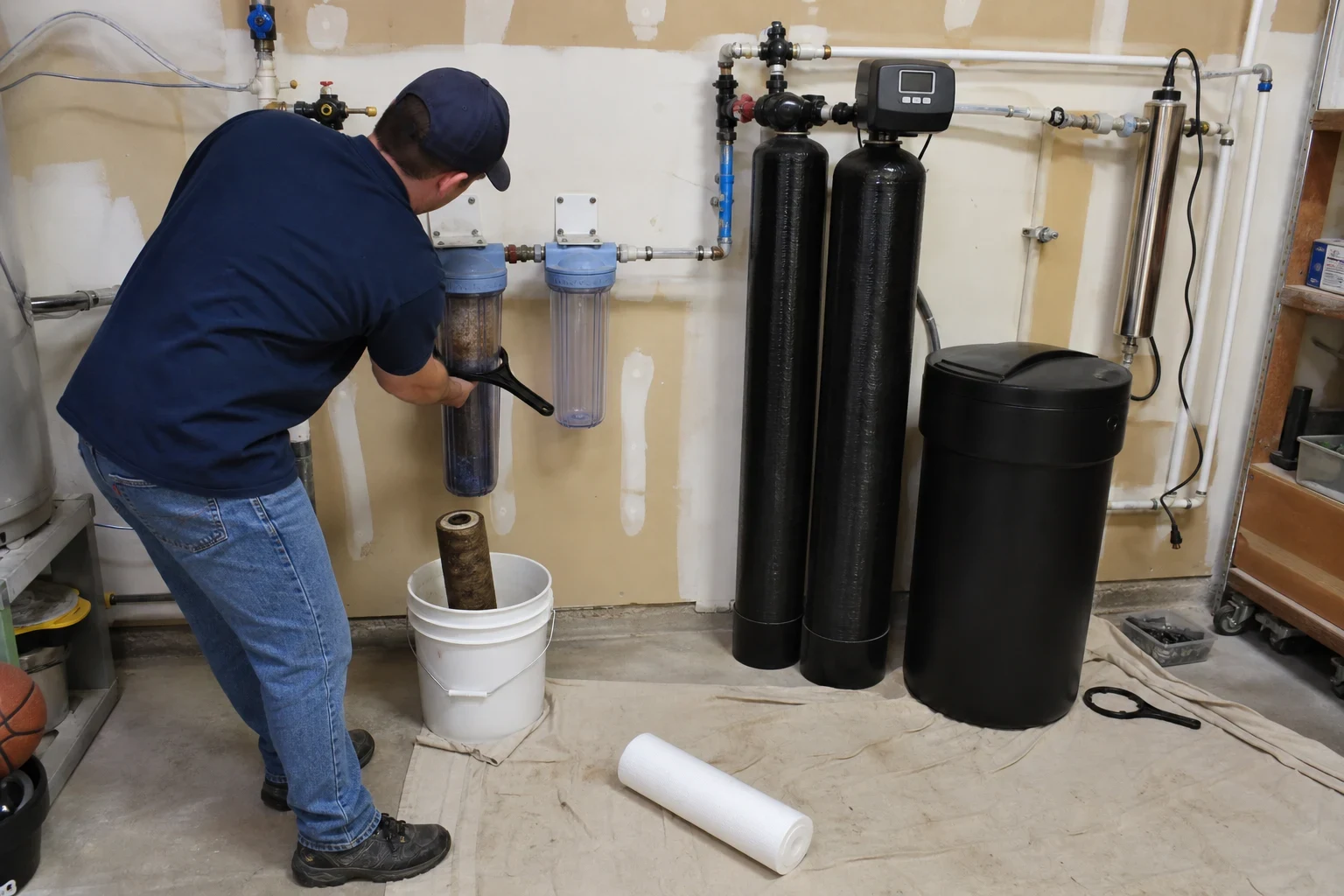
What a maintenance visit actually does
Every cartridge in your home has a working limit. A sediment filter loads up with particles until water has to force its way through, and pressure drops at the taps. A carbon block runs out of adsorption sites, and the chlorine taste it was removing comes back. A reverse osmosis membrane slowly fouls, so more dissolved solids pass into your drinking water. None of this is visible from outside an opaque housing.
We service whole-house systems, under-sink reverse osmosis units and point-of-use filters, including equipment we did not install. Our job is to put fresh media in, confirm the seals are sound and catch small problems, like a hairline crack in a housing or a flattened O-ring, before they become a leak inside a cabinet or wall.
What we replace and check
Cartridge and media replacement
We match the replacement to your housing size and the job it does, such as a pleated or spun polypropylene sediment cartridge ahead of a carbon block. Using the wrong micron rating can clog early or let particles through to the next stage.
O-ring inspection and lubrication
The O-ring is what keeps a housing dry. We clean the groove, check the ring for flat spots or cracking, replace it when it is worn and coat it with food-grade silicone grease so it seats evenly.
Housing and fitting inspection
Plastic housings can develop stress cracks near the threads, especially if they were overtightened in the past. We look at the sump, cap, push-to-connect fittings and tubing, and point out anything that should be replaced.
RO membrane and tank check
On reverse osmosis units we measure dissolved solids before and after the membrane to see how well it is rejecting them. We also check the storage tank air charge, because a low charge gives you a weak, slow stream at the faucet.
System sanitizing
When we change RO stages, we can sanitize the housings and lines before the new cartridges go in. This keeps the fresh media from sitting in a system that has had stagnant water in it.
Written service notes and photos
You get a record of the parts replaced, the date and the condition we found, with photos of anything worn or damaged. That record is useful for your next visit and for any insurance conversation down the road.
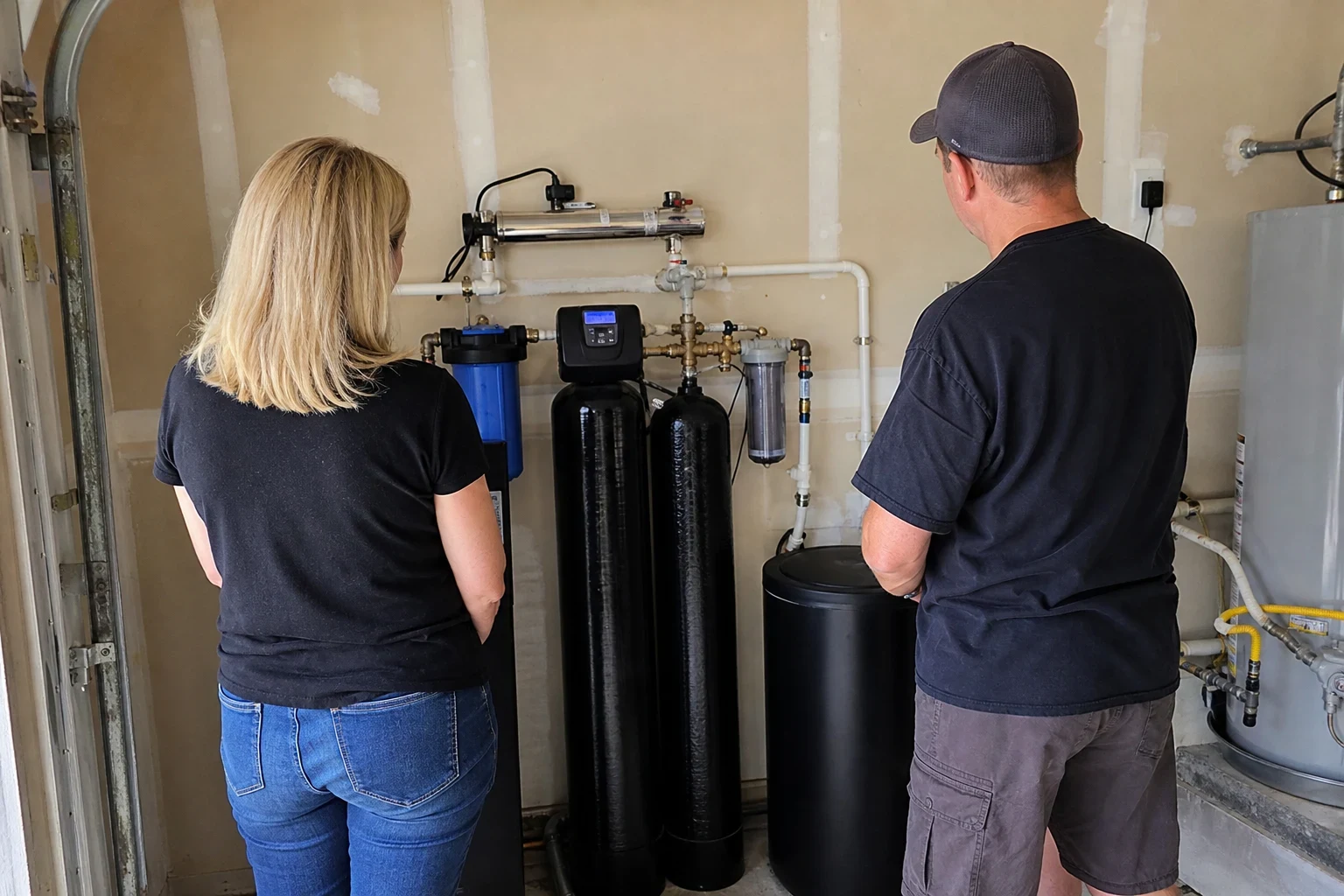
How to tell your filters are past due
- Weaker water pressure
- A packed sediment cartridge chokes flow to every fixture downstream. When showers lose strength and the filter is not new, check that cartridge first.
- Old taste or odor returns
- Used-up carbon no longer pulls out chlorine. Once filtered water tastes the way it did before the system was installed, the media is spent.
- A slow RO faucet
- A worn-out prefilter or fouled membrane makes the storage tank fill slowly. A thin stream at the drinking faucet usually traces back to one of them.
- Dampness near a housing
- Seepage at the cap, a wet cabinet floor or mineral buildup on a fitting means a seal or housing is giving out. Shut the inlet valve if you can and have it checked before it worsens.
- Nobody knows when it was last changed
- If no date was ever recorded, treat the cartridge as overdue. We start a written log at the first visit so timing the next change is simple.
How the visit runs
- 1
Talk it through by phone
Tell us what equipment you have, or describe it, and when it was last serviced. We confirm cartridge sizes so we arrive with the right parts.
- 2
Shut off and depressurize
We close the inlet valve, relieve pressure and lay down towels or a tray under each housing. Old cartridges come out and get bagged for removal.
- 3
Clean, inspect and reassemble
Housings are cleaned, O-rings are checked and greased, and new media goes in. We hand-tighten with a housing wrench just to snug, since overtightening is a common cause of cracked sumps.
- 4
Flush, test and check for leaks
New carbon is flushed to clear fines, and RO systems are run to purge the first tank. We recheck every joint under pressure and wipe the area dry.
- 5
Leave the record
You get the service notes, photos and a recommended date for the next change based on your water use and the system type.
What changes the price of a service visit
The replacement media is most of the bill, and that depends on what your system uses. Before we arrive, we give you an itemized estimate by phone showing which cartridges we will change and why. If we spot a worn part during the visit, we show it to you and get your OK before swapping it.
- How many stages you have
- One whole-house sediment filter is quick work. A five-stage RO unit that also needs a new membrane means more parts and more time.
- Cartridge style and size
- Big Blue whole-house cartridges, carbon blocks and RO membranes vary widely in price. Brand-specific proprietary cartridges cost more than standard sizes.
- Shape of the housings and seals
- A cracked sump, brittle tubing or a worn shutoff valve means parts beyond the usual cartridge change.
- How easy the filters are to reach
- Filters mounted high on a garage wall, tucked behind a water heater or buried in a packed sink cabinet take more time to service safely.
Filter maintenance questions
- How often should my filters be changed?
- There is no single interval that fits every system. A sediment cartridge usually loads up soonest, carbon follows, and an RO membrane lasts the longest. How fast each one goes depends on household water use and what is in the water, so we set your schedule after seeing how loaded the old cartridges were.
- Do you service systems another company installed?
- Yes. We work on standard housing sizes and most common RO units. If your system uses a proprietary cartridge, tell us the brand or model on the phone so we can confirm we can get the right part.
- A filter housing leaked and damaged my cabinet. Can you help with insurance?
- We can document what failed. We photograph the cracked housing or failed seal, note the date and condition in writing, and keep the failed part if you want it. Whether a leak is covered is your insurer's decision, and policies often treat sudden failures differently from slow leaks, so we explain what we found and leave the coverage question to your adjuster.
- Does heat in the garage matter?
- It can. Systems in hot garages during a Texas summer sit in warm water between uses, which makes it more important not to let carbon cartridges run long past their change date. Keeping to a regular schedule handles most of it.
- Should I get my water tested at the same time?
- If you have never tested, a service visit is a good time to start. Our water testing tells you whether your current filters fit your water or whether something like iron and sediment filtration or a softener deserves a look.
Bring your filters back to full strength
Let us know which system you have and when it last had service. We will confirm the parts, give you an itemized estimate by phone and book a visit.