ServicesWater softeners
Water Softeners in Carrollton, Sized From a Hardness Test
We measure your water's hardness in grains per gallon before we talk about equipment. If the reading and your fixtures point to a softener, we size the resin tank and control valve to your actual use. If they don't, we tell you that and point you elsewhere.
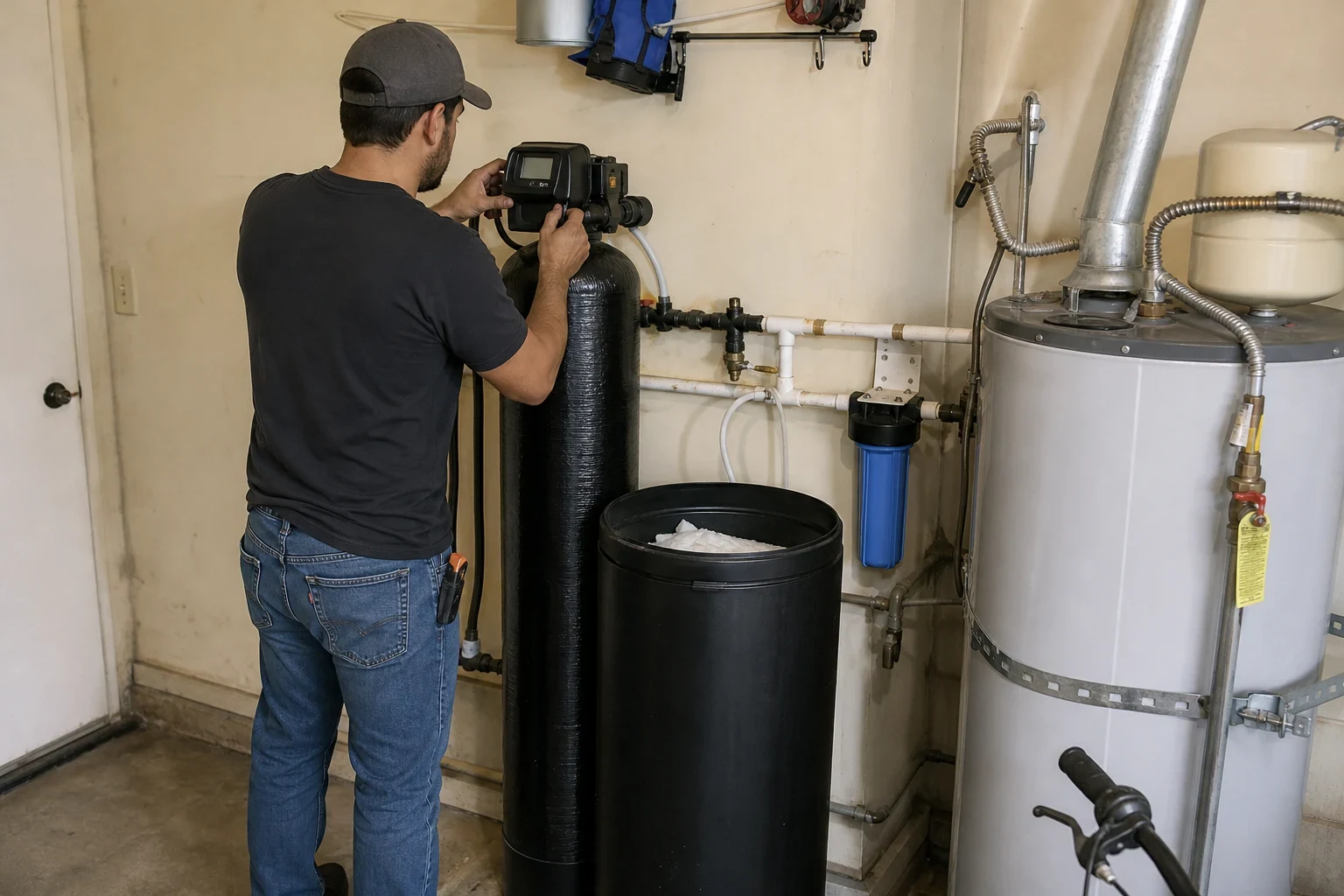
What a softener does: removes calcium and magnesium
A softener works by ion exchange. Water flows through a tank of resin beads that swap sodium or potassium ions for the calcium and magnesium behind scale. Once the resin is full, the control valve starts a regeneration cycle that rinses the beads with brine from a separate salt tank and flushes the hard minerals to the drain.
That is its only job. It does not take out chlorine taste, lead or more than a little iron staining. So every softener job we do begins with water testing. Hardness in North Texas changes with the source and the season, and a reading at your own faucet shows whether softening is worth the salt, the drain line and the floor space.
What comes with a softener install
Hardness and iron test
We measure total hardness in grains per gallon and also check iron, since more than a small amount fouls the resin and needs a different filter first.
Sized by grain capacity
Your hardness reading times your household's daily water use tells us the resin volume that regenerates every several days rather than nightly. A unit that is too small burns through salt and wears out its resin sooner.
Metered valve and bypass
The demand-initiated valve we install regenerates by gallons used instead of on a set timer. A bypass valve takes the softener out of the line for service while your home keeps its water.
Air gap on the drain line
Regeneration water runs to a drain through a proper air gap, so wastewater cannot siphon back into the brine tank or your supply.
Setup, programming and cleanup
We add salt, enter the hardness and capacity in the valve, run the first regeneration and check each fitting for drips. We take the packaging and old fittings with us.
Clues that hard water is behind it
Chalky buildup on fixtures
The white rings on aerators, showerheads and glass doors are calcium carbonate that stays behind when water dries.
Noisy water heater
Scale collects at the bottom of a tank heater and traps water beneath it, which pops and rumbles as it boils. The layer also slows heating and wastes energy.
Poor lather
Calcium and magnesium react with soap to make scum, so you go through more shampoo and detergent and still find film on the tub.
Spots on dishes and glasses
Cloudy spots after a dishwasher cycle frequently mean hardness, although rinse aid and water temperature also matter.
Orange or brown stains
These typically point to iron rather than hardness. Our iron and sediment filtration page explains that, and a test tells you which one you are dealing with.
From the first test to the first regeneration
- 1
Testing at your faucet
We draw a sample, measure hardness and iron, and check your fixtures and water heater. The numbers are yours in writing.
- 2
A straight recommendation
When hardness is low, we tell you a softener is not worth it. When it is high, we explain the sizing and give you an itemized written estimate.
- 3
The install
We close the main, cut into the line where it enters the house, frequently by the water heater or in the garage, and set the bypass, resin tank and brine tank. If your city needs a permit for the connection, we pull it.
- 4
Setup and walkthrough
We program the valve, run a regeneration and show you how to add salt and work the bypass.
What moves the price of a softener
Most of the cost comes from two things: how much hardness the unit has to remove and how much work it takes to connect it. We price after the test and a look at your plumbing, and the estimate lists each part and task separately.
- Hardness and water use
- Higher grain readings and larger households need more resin capacity, which means a larger tank and valve.
- Existing softener loop
- Some homes already have a loop stubbed out near the main. Without one, we run new pipe to a suitable spot, which adds labor and materials.
- Drain and outlet access
- The control valve needs a drain for regeneration water and, on most models, a power outlet. Distance to both affects the install.
- Sodium or potassium
- Potassium chloride costs more per bag than sodium chloride, which matters over the life of the system rather than on install day.
Common water softener questions
Something not covered here? (972) 430-6272
How can I tell if I need a softener?
A hardness test is the only real answer. With a low reading and no scale, a softener brings salt, extra water use and upkeep for little benefit. We would sooner say so than sell you equipment you do not need.
Does softened water taste salty?
With moderate hardness, the sodium added is slight and most people cannot taste it. To keep it out of drinking water, under-sink reverse osmosis at the kitchen tap removes most of it, or you can fill the brine tank with potassium chloride.
Can a softener get rid of chlorine taste?
No. Ion exchange resin leaves chlorine in the water. Whole-house carbon filtration handles that, and it can be installed ahead of the softener to protect the resin as well.
Will homeowners insurance pay for scale damage or a leaking softener?
Every policy is different, and coverage is up to your adjuster, not us. Slow scale buildup is usually considered wear, while sudden water damage from a failed fitting may be treated differently. When we find damage, we photograph it, note what failed and why, and explain what a claim typically involves so you can speak with your insurer with clear records.
What upkeep does a softener need?
Look at the salt once a month and keep it above the water line in the brine tank. Break apart any salt bridge that forms. Our filter replacement and maintenance service handles resin cleaning and valve checks.
Find out what your water actually measures
We'll test your hardness, explain the reading, and only quote a softener if the numbers support one.